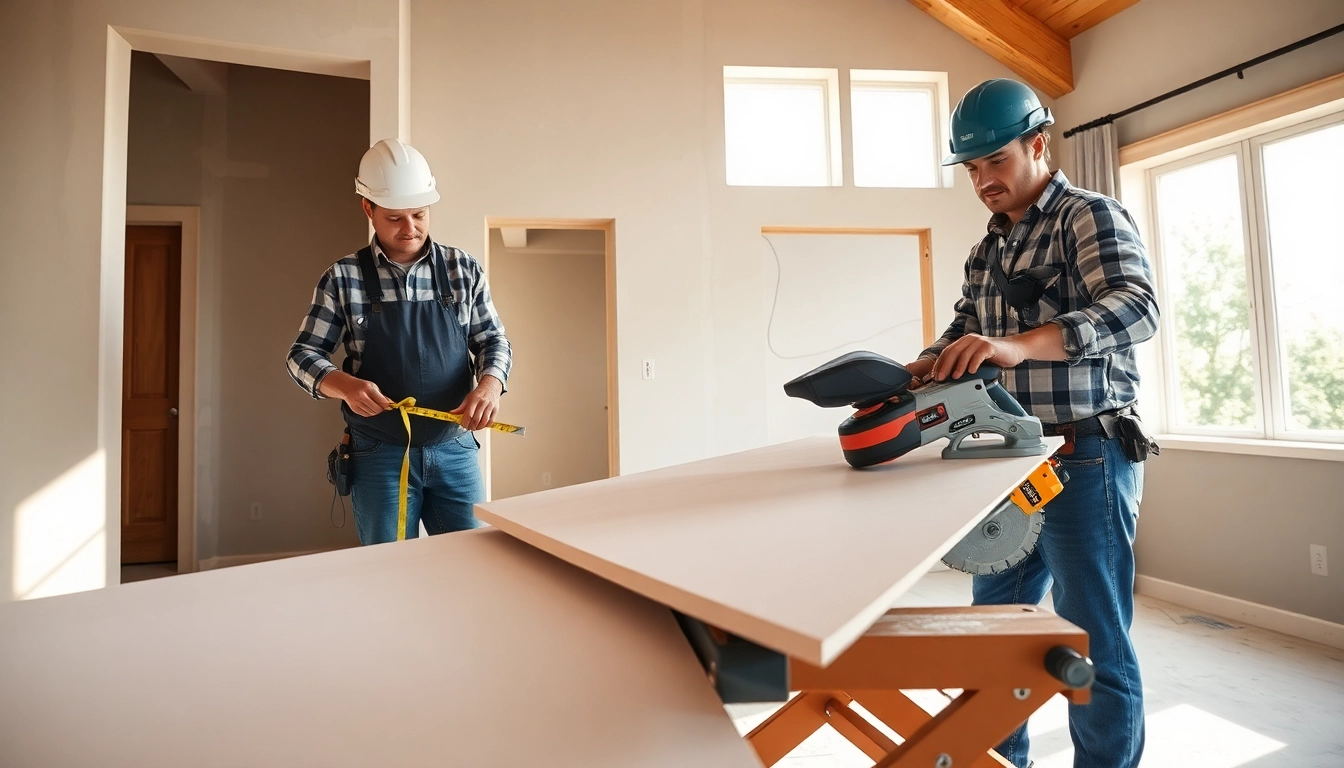
Understanding Drywall: Basics and Benefits
What is Drywall and Its Uses?
Drywall, also known as gypsum board or plasterboard, is a building material composed of a layer of gypsum sandwiched between two sheets of heavy paper. It is commonly used in the construction of walls and ceilings due to its affordability, ease of installation, and certain fire-resistant qualities. Beyond residential homes, drywall is also utilized in commercial buildings, schools, and other types of structures. This versatile material serves various purposes, including soundproofing, insulation, and fire safety, making it a preferred choice among builders and homeowners alike. For more expert insights, refer to drywall resources.
Advantages of Using Drywall
The advantages of drywall are numerous. First, its ease of installation significantly reduces labor costs compared to traditional plaster methods. Drywall can be quickly cut to size and mounted, making it ideal for both new constructions and renovations. Second, drywall provides substantial sound attenuation, isolating spaces effectively. Additionally, its surface is conducive to various finishes such as paint, allowing for aesthetic versatility. Drywall also promotes safety; many types feature moisture and fire resistance, enhancing structural integrity and safety in homes and public buildings alike.
Common Materials for Drywall
Standard drywall consists of gypsum, which is found abundantly in nature. Other variations include moisture-resistant (greenboard) drywall, which features a special coating to protect against humidity, and fire-resistant drywall, which includes additives that enhance its fireproof capabilities. For specialized applications, such as soundproofing, manufacturers often produce drywall with additional materials that help attenuate noise. The variety and flexibility of materials allow builders to choose the right type of drywall according to specific project requirements.
Choosing the Right Drywall for Your Project
Types of Drywall Available
When selecting drywall, it is crucial to understand the different types available. The most common types include:
- Regular Drywall: This is the standard option, ideal for interior walls and ceilings in low-humidity areas.
- Moisture-Resistant Drywall: Often used in kitchens, bathrooms, or laundry areas, it offers enhanced resistance to mold and moisture.
- Fire-Resistant Drywall: Thick and heavy, this type contains additives that enhance its fire-resistance properties, suitable for areas requiring additional safety measures.
- Soundproof Drywall: Designed to minimize sound transmission between rooms, it is perfect for shared walls in apartments or crowded homes.
Factors to Consider When Selecting Drywall
Choosing the right drywall involves considering several key factors:
- Location: Identify where the drywall will be installed—moist areas, fire-rated zones, or sound-sensitive spaces.
- Thickness: Different thicknesses serve different purposes, such as whether additional strength is required.
- Finishing: Consider the desired finish—some drywall types work better with paint or wallpaper than others.
Comparison of Drywall Thicknesses
Drywall typically comes in thicknesses of 1/4", 1/2", and 5/8":
- 1/4 Inch: Ideal for curved surfaces or as a secondary layer over existing drywall.
- 1/2 Inch: The most common thickness used for interior walls and ceilings, offering a good balance of weight and strength.
- 5/8 Inch: Heavier and stronger, this thickness is typically used in commercial settings or in areas requiring enhanced fire resistance.
Preparing for a Drywall Installation
Essential Tools and Materials Needed
Proper preparation is key to a successful drywall installation. Essential tools include:
- Drywall sheets
- Drywall screws and a power drill
- A utility knife for cutting drywall
- A taping knife for joint compound application
- Measuring tape and a level for accurate placements
- Safety gear: goggles, mask, and gloves
Pre-Installation Checklist
Before beginning installation, ensure the following steps are completed:
- Inspect framing to ensure structural integrity.
- Verify that electrical and plumbing work is completed.
- Ensure that all items on the wall such as pipes or electrical wires are appropriately positioned.
- Confirm the storage of drywall is done in a clean, dry space.
Safety Precautions During Installation
Safety is paramount in any home improvement project. Ensure you wear proper safety gear—like goggles and a dust mask—when cutting drywall, as airborne particles can be hazardous. Always use the right tools, and ensure the work area is free from debris to prevent accidents. Additionally, proper lifting techniques are crucial, as drywall sheets can be heavy. Seek assistance when lifting large sheets to avoid injury.
Techniques for Installing Drywall
Step-by-Step Installation Process
Installing drywall can be straightforward if approached methodically:
- Measure the area and cut drywall sheets to size.
- Secure the drywall to the studs using screws, starting at the top and working downwards.
- Ensure that edges meet properly for smooth joints.
- Apply joint tape over seams, followed by joint compound to create a smooth finish.
- Sand the dried compound down for an even surface, then repeat as necessary.
- Finish with appropriate paint or wallpaper as desired.
Common Mistakes to Avoid
Even seasoned DIY-ers can make mistakes. Here are some common pitfalls to avoid:
- Not using enough screws to secure drywall, which can lead to sagging.
- Skipping the taping and mudding process, which can result in visible seams.
- Neglecting to properly measure cuts, leading to gaps and uneven edges.
Finishing Techniques for a Smooth Surface
Achieving a smooth finish on drywall is essential for aesthetics. After applying joint compound:
- Wait for the compound to dry before sanding it down.
- Use a fine-grit sandpaper for a smooth surface, being careful not to damage the drywall.
- Powdered residue should be wiped clean to ensure good adhesion for painting or other finishes.
Maintenance and Repair of Drywall
How to Repair Minor Damage
Repairing minor drywall damage such as small dents or holes can be manageable. Use a spackle or joint compound to fill the damaged area, let it dry, and sand down the surface for a smooth finish. Small cracks might also benefit from a coat of paint to blend seamlessly with the surrounding area.
Preventing Common Drywall Issues
Preventing issues with drywall can save time and money in repairs. Ensure proper ventilation to minimize moisture buildup that can lead to mold. Use moisture-resistant drywall in high-humidity areas to prevent warping or deterioration.
When to Call a Professional for Repairs
If damages are extensive, such as large holes or significant water damage, it is advisable to call a professional. Additionally, if the installation requires advanced techniques or new framing, an expert will ensure the job is done safely and correctly, minimizing future issues.
FAQs About Drywall
What is the lifespan of drywall?
Drywall typically lasts for several decades but can be shorter in high-moisture areas. Regular maintenance can extend its life significantly.
Can drywall be used outdoors?
Standard drywall is not suitable for outdoor use due to moisture exposure. Specialized exterior-grade products should be used instead.
Is drywall fire-resistant?
Certain types of drywall are designed to be fire-resistant, containing materials that slow down heat and prevent flames from spreading.
How do I know if I need to repair my drywall?
Signs include visible cracks, holes, water stains, or an uneven surface—any of which may warrant repair to maintain integrity.
Can I paint directly on drywall?
Yes, but it's recommended to apply a primer first. This ensures better adhesion and a more uniform paint finish.